


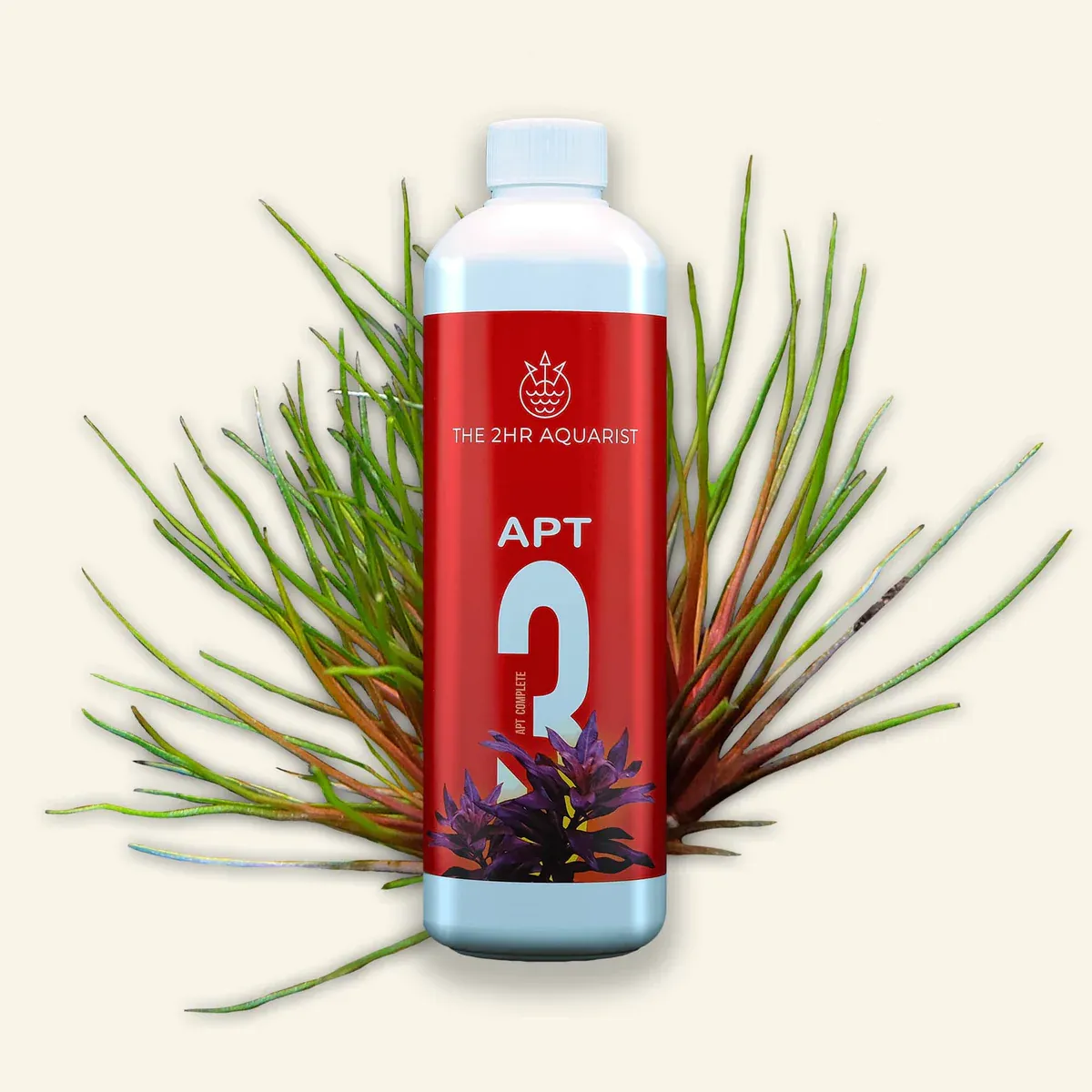
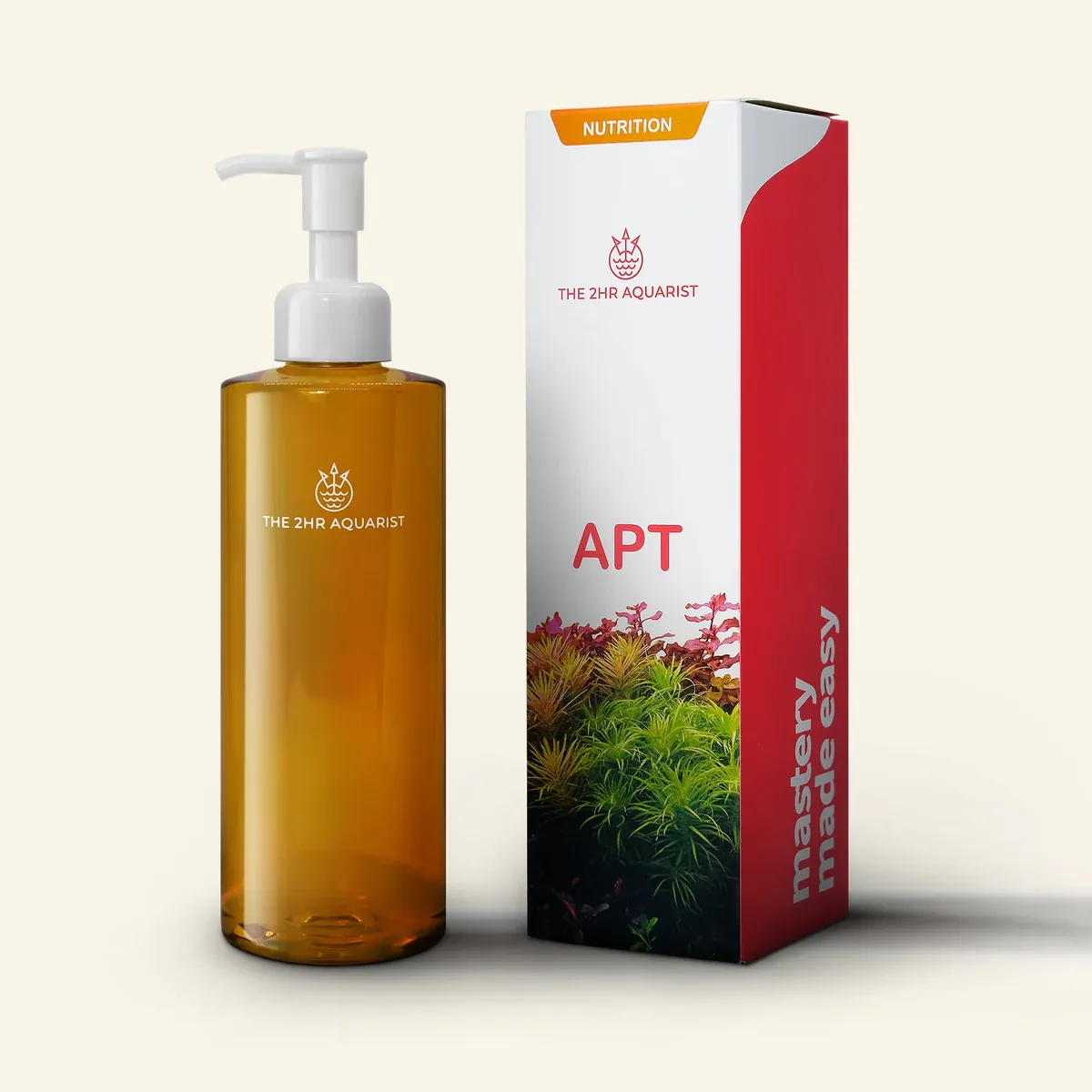
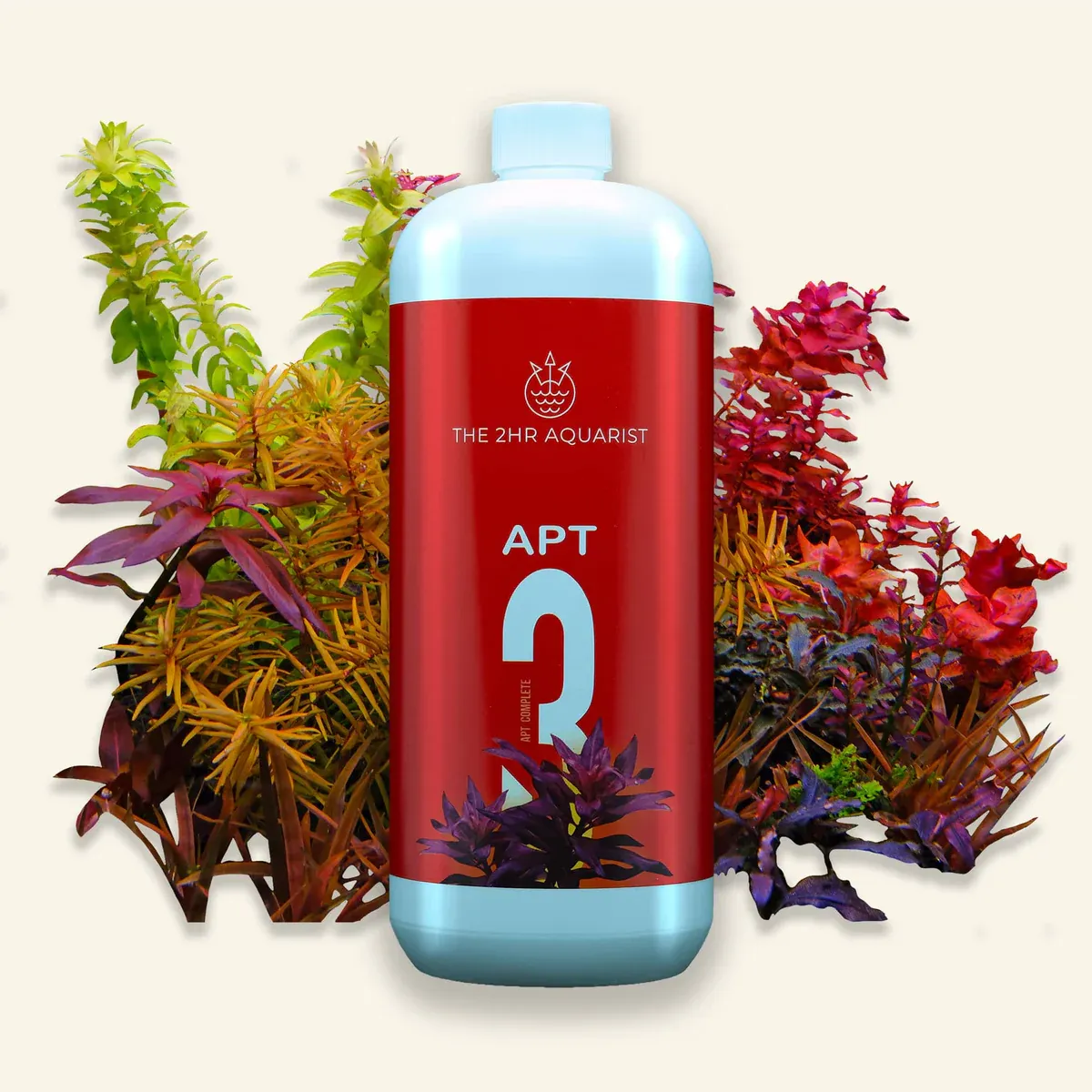

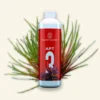
THE 2HR AQUARIST Apt Complete
Price range: ₹850.00 through ₹4,090.00
AQUARIUM PLANT FERTILIZER
- Tackle the most demanding plants
- Ready-to-use concentrate
- 100% Comprehensive NPK, Macro, Micro & Trace elements.
Description
THE 2HR AQUARIST Apt complete
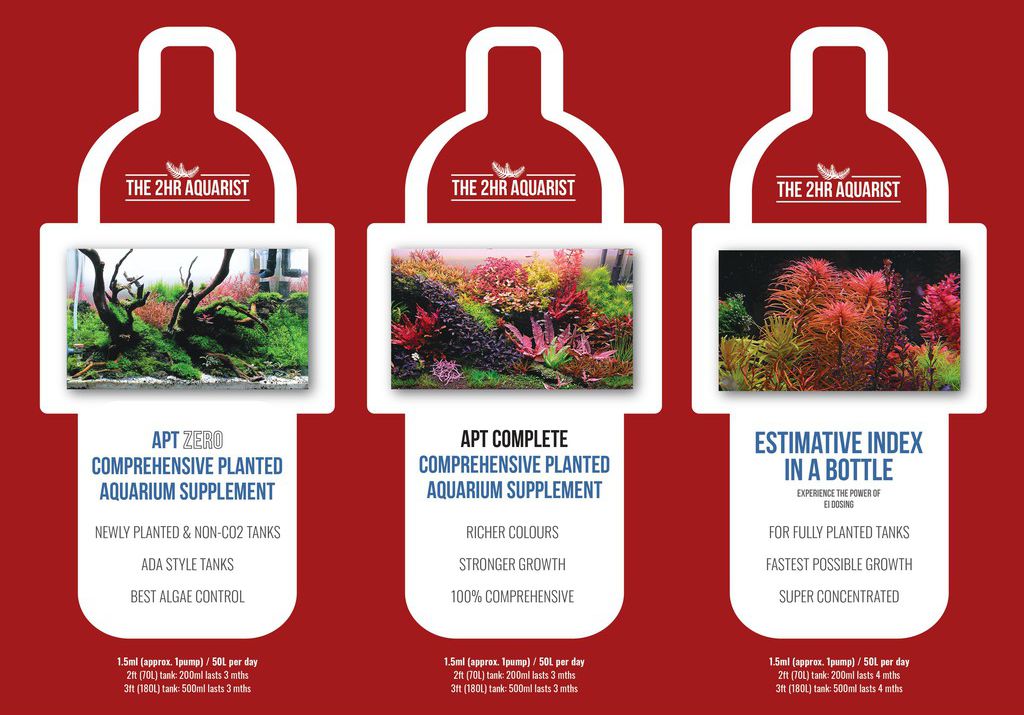
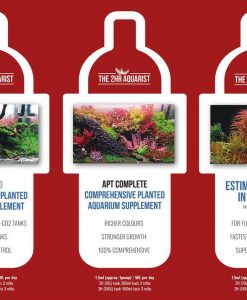
Tackle the most demanding plants, or just enjoy everyday magic in the simplest tank. The easiest way to unlock the true potential of your planted tank today.
The 2Hr Aquarist All-In-One Fertiliser.
Richer Colors | Less Algae | Faster Results
FAQ Here.
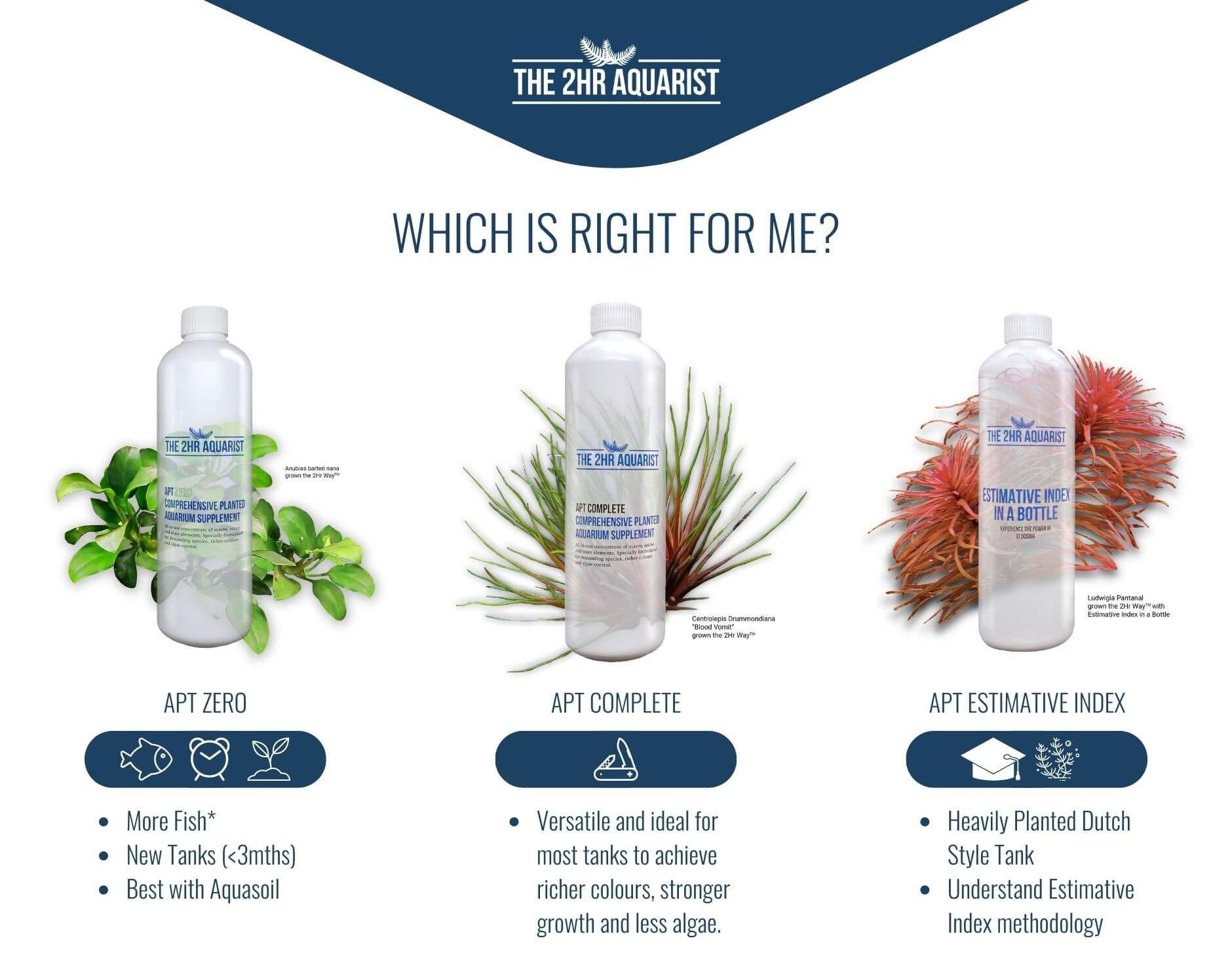
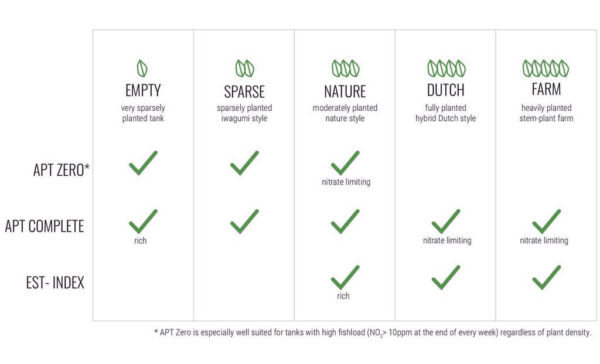
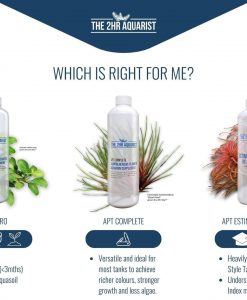
APT Complete should be the default choice. It provides the optimal balance of nutrition and algae control across a wide range of tank styles. It contains a complete set of nutrients necessary for plant growth and does not require additional supplementation.
Just as important as what plants need is how much they need. APT Complete was crafted based on the study of 2 of the industry? most respected (and divergent) approaches- Tom Barr?s Estimative Index (EI) and Takashi Amano?s Nature-Style/ADA system. While EI focuses on providing nutrients in excess (and resetting through large weekly water changes), ADA focuses on quality growth at a more moderated pace.
APT Complete takes a middle path. It is a lot more concentrated than ADA to compensate for the ?everyday / average / normal? substrate used by most hobbyists, but less aggressive than EI. You get everything that EI offers- but just slightly more safely / slowly.
Dosage: Each 5ml per 100L dose adds 3.8ppm
GUARANTEED ANALYSIS
Total Nitrogen (N) – 0.75% (0.75% Nitrate Nitrogen)
Available Phosphoric Acid (P2O5) – 0.69%
Soluble Potash (K2O) – 4.52%
Magnesium (Mg) – 1.10%
Iron (Fe) – 0.12% (0.12% Chelated Iron)
Derived from: Potassium Sulphate, Potassium Phosphate, Potassium Chloride, Magnesium Nitrate, Magnesium Sulphate, DTPA Iron, EDTA Iron, EDDHA Iron
Artful Intelligence


When might APT not work?
IN NEW TANKS
It is normal for tanks less than 6 months old to have various bouts of algae issues, most of which can be avoided with proper cycling prior to planting. APT cannot compensate for inadequate cycling.
It is also normal for plants to take several weeks to adapt. APT helps to speed up the process, but you still need patience. In tanks without CO2, this takes 2-3 months. Adaptation may involve shedding leaves (yes!) and / or having leaves that appear deformed. The hardest, yet most effective response is to tinker less and provide a stable tank environment for the plants to adapt. Look for improvement in NEW LEAVES, not old ones.
IN MATURE TANKS
A mature tank can respond to better nutrition in several ways. The best (and most common) outcome is healthier NEW GROWTH. Old leaves do not rejuvenate even when conditions improve, and may even deteriorate faster, as we explain?here.
In rare cases, better nutrition can seemingly trigger algae.?This can happen:
(a) if there is prior accumulation of?organic waste, especially on mosses and slow growers. When plants adjust to a new nutritional environment, they release proteins that serve as food for algae. The combination of accumulated organic waste + excreted proteins can be a trigger for algae.
(b) if?volatile organic matter is released due to replanting or cleaning. In mature tanks, volatile organic matter builds up naturally in the substrate and hard-to-reach corners. When inadvertently released, often coincidentally with improved nutrition, algae can bloom. This can be avoided by performing thorough water change the 2Hr way after replanting / revamping the tank.
(c) if seemingly ?OK? plants (especially slow growers like Mosses, Bucephalandra, Crypts, Java Fern, Anubias, Alternanthera species etc.) are?actually not as healthy as they appear. Plants often respond to improved tank conditions (better nutrition, or lighting, or CO2?) by accelerating the shedding of older, less healthy leaves. This attracts algae, which help in the decomposition process. Slow growers that are not healthy are especially hard to spot, as they can be in ‘Zombie? states for a long time, as we describe?here.
(d) finally, if you are?making a drastic change in dosing regime?(e.g. very lean to something alot richer, or vice versa), this forces plants to reprogram their cells to adapt and this process almost certainly triggers algae. A gradual transition over 2-3 weeks often helps. But the longer slow-growers have adapted to a particular environment, the harder it is for them to ‘switch’.
If you have a mature tank (> 1 year old) and are looking to improve plant health / growth, please?check out this article.
It is normal for tanks less than 6 months old to have various bouts of algae issues, most of which can be avoided with proper cycling prior to planting. APT cannot compensate for inadequate cycling.
It is also normal for plants to take several weeks to adapt. APT helps to speed up the process, but you still need patience. In tanks without CO2, this takes 2-3 months. Adaptation may involve shedding leaves (yes!) and / or having leaves that appear deformed. The hardest, yet most effective response is to tinker less and provide a stable tank environment for the plants to adapt. Look for improvement in NEW LEAVES, not old ones.
A mature tank can respond to better nutrition in several ways. The best (and most common) outcome is healthier NEW GROWTH. Old leaves do not rejuvenate even when conditions improve, and may even deteriorate faster, as we explain?here.
In rare cases, better nutrition can seemingly trigger algae.?This can happen:
(a) if there is prior accumulation of?organic waste, especially on mosses and slow growers. When plants adjust to a new nutritional environment, they release proteins that serve as food for algae. The combination of accumulated organic waste + excreted proteins can be a trigger for algae.
(b) if?volatile organic matter is released due to replanting or cleaning. In mature tanks, volatile organic matter builds up naturally in the substrate and hard-to-reach corners. When inadvertently released, often coincidentally with improved nutrition, algae can bloom. This can be avoided by performing thorough water change the 2Hr way after replanting / revamping the tank.
(c) if seemingly ?OK? plants (especially slow growers like Mosses, Bucephalandra, Crypts, Java Fern, Anubias, Alternanthera species etc.) are?actually not as healthy as they appear. Plants often respond to improved tank conditions (better nutrition, or lighting, or CO2?) by accelerating the shedding of older, less healthy leaves. This attracts algae, which help in the decomposition process. Slow growers that are not healthy are especially hard to spot, as they can be in ‘Zombie? states for a long time, as we describe?here.
(d) finally, if you are?making a drastic change in dosing regime?(e.g. very lean to something alot richer, or vice versa), this forces plants to reprogram their cells to adapt and this process almost certainly triggers algae. A gradual transition over 2-3 weeks often helps. But the longer slow-growers have adapted to a particular environment, the harder it is for them to ‘switch’.
If you have a mature tank (> 1 year old) and are looking to improve plant health / growth, please?check out this article.
Additional information
| Brand | |
|---|---|
| Country of Origin | |
| Aquarium Type | |
| Weight | 100 ML, 1000 L, 200 ML, 300 ML, 500 ML |
FAQs
No FAQ Found
Reviews (1)
1 review for THE 2HR AQUARIST Apt Complete
Add a review
Ask A Question
Write Your Question !
Related products
Items on Sale

Items on Sale

Rahul (verified owner) –
Amazing product especially for red plants. Healthy growth.
No algae issue if used in correct dosage.